How to Plan a Stress‑Free Kitchen Remodel in Collin County: Timeline and Tips
How to Plan a Stress-Free Kitchen Remodel in Collin County: Timeline, Budget, and Expert Tips
A stress-free kitchen remodel in Collin County starts with a realistic plan that balances timeline, budget, and contractor selection so homeowners can maintain daily life while upgrades proceed smoothly. This guide shows how to map a remodel timeline for cosmetic, mid-range, and full structural projects, how to set a practical DFW-specific budget and contingency plan, and how to choose contractors and cabinetry that reduce surprises. Many Collin County homeowners worry about extended disruption, permit delays, and cabinetry lead times; practical steps—like defining scope, staging a temporary kitchen, and validating schedules—minimize those risks. You will learn phase-by-phase timelines, a clear percentage budget allocation, permit triggers specific to the region, and stress-reduction tactics such as temporary setups and communication protocols. The article also compares cabinet materials and lead times, offers checklists for pre-start preparation, and explains what to ask prospective remodelers during interviews. Throughout the guide, semantic keywords like remodel timeline Collin County, kitchen remodel planning Dallas, and stress-free home renovation tips are woven in to help you find targeted, actionable local guidance.
What Is a Realistic Timeline for Your Collin County Kitchen Remodel?
A realistic timeline for a Collin County kitchen remodel depends primarily on scope: cosmetic updates usually finish quickest, mid-range projects require more coordination, and full structural remodels take the most time due to permits and trades coordination. Timelines are driven by design finalization, permitting, demolition, rough-ins, cabinetry production and installation, finishes, and final inspections; each phase builds on the previous one, so delays in design or cabinet lead times extend the whole schedule. Homeowners benefit from a clear schedule with milestone dates and buffer windows for cabinet delivery and inspection scheduling. Understanding these dependencies helps set realistic expectations and reduces stress by making trade-offs explicit up front.
What Are the Key Phases of a Kitchen Remodel Timeline?
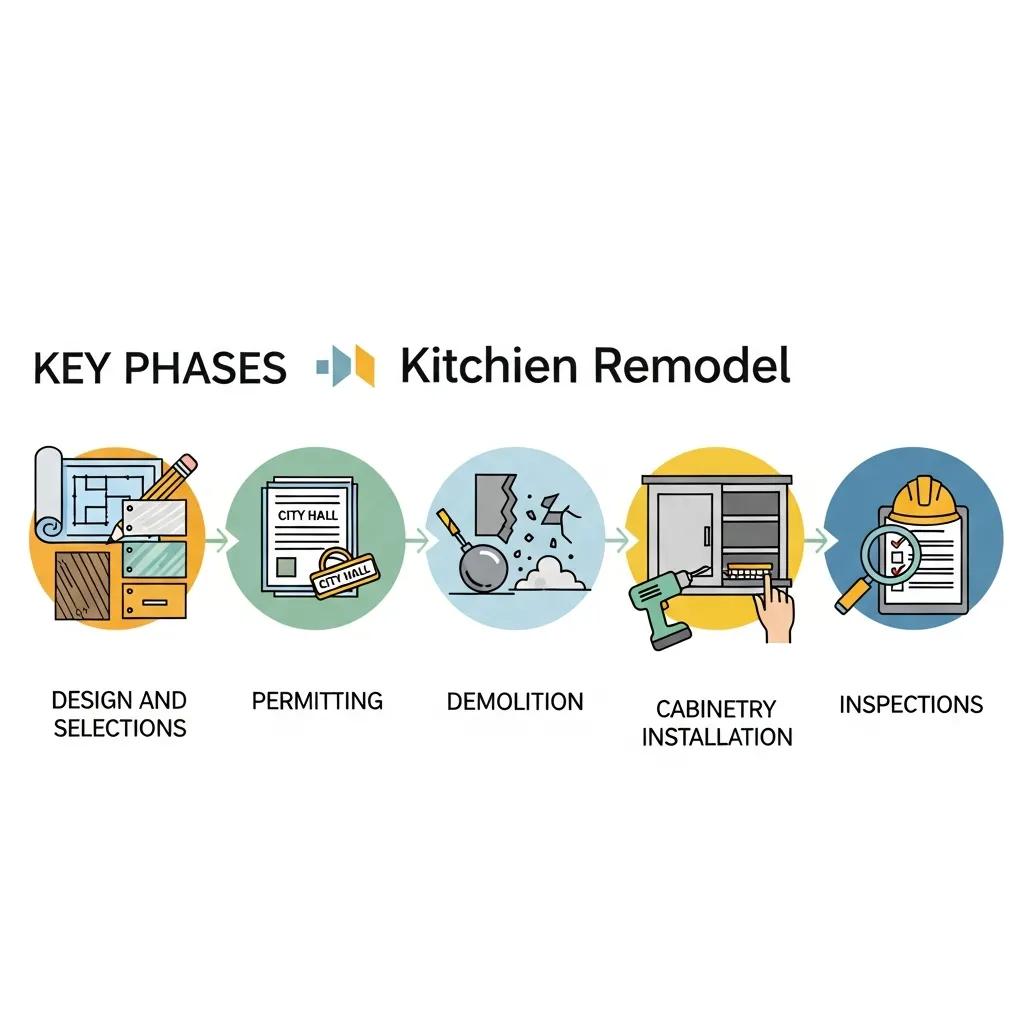
The kitchen remodel breaks down into distinct phases that each require coordination and decision-making, and knowing the tasks and typical duration for each phase reduces uncertainty. Design and selections typically take 2–4 weeks for moderate projects, permitting and approvals can add 1–4 weeks depending on scope, demolition and rough-in work commonly span 1–2 weeks, and cabinetry installation plus finishes often require 2–4 weeks; inspections may add additional days. These phase durations vary with contractor workflows, material lead times, and whether structural changes or new mechanical work are required. Planning buffers for cabinet lead times and inspection windows prevents cascading delays and improves homeowner experience.
The main remodeling phases and typical sequence are listed here:
- Design & selections: Finalize layout, materials, and permitting needs.
- Permitting & approvals: Submit documents and await local authorization.
- Demolition & rough-in: Remove old elements and install plumbing/electrical.
- Cabinetry & finishes: Install cabinets, countertops, appliances, and trim.
- Inspections & punch list: Complete final checks and minor corrections.
This phased list clarifies dependencies and helps homeowners allocate time and attention to each step. Knowing the sequence prepares you to ask targeted questions about milestones and what could push each phase longer.
Introductory timeline comparison for remodel types:
| Remodel Type | Typical Duration | Key Dependency |
|---|---|---|
| Cosmetic update | 4–6 weeks | Material availability and schedule of trades |
| Mid-range remodel | 8–12 weeks | Cabinet lead times and appliance delivery |
| Full structural remodel | 3–6 months | Permits, framing, HVAC/plumbing alterations |
This table highlights how scope scales time and what homeowners should watch closely. When the cabinet lead time is long, schedule buffers into the project to avoid idle trades waiting on installation.
How Do Project Scope and Custom Cabinetry Affect Your Remodel Duration?
Scope and cabinetry choices directly affect total duration because custom elements require additional design, fabrication, and quality checks before installation, and structural changes require additional inspections and scheduling. Custom cabinet lead times can range from several weeks to multiple months depending on materials, finish, hardware selections, and supplier capacity, so scheduling cabinet production early in the design stage reduces schedule risk. Fast-track options exist for cosmetic or surface-level renovations where cabinets are untouched, but those do not apply to projects needing new custom cabinetry or structural work. Plan a minimum buffer of two to four weeks for cabinet production in mid-range projects and larger buffers for fully custom builds to avoid delaying finishing trades.
Practical ways to manage cabinetry lead times:
- Prioritize cabinet design sign-off early to start fabrication.
- Consider semi-custom or in-stock cabinet options to shorten lead time.
- Coordinate appliance and countertop orders to align with cabinet delivery.
These strategies reduce the chance that cabinetry becomes the critical path item, enabling a smoother flow from installation to final inspection. When expedited turnaround is needed, some providers offer accelerated programs that can compress disruption for homeowners.
After discussing expedited options and lead times, consider how provider programs and clear scheduling can reduce timeline uncertainty. The Perfect Cabinet, a locally owned, fully insured, family-run business specializing in complete home remodels and custom cabinetry in Collin County, TX and surrounding DFW areas, offers a ’10-Day Kitchen’ program for quick updates and emphasizes transparent communication about custom cabinetry lead times so homeowners can plan realistically. For many homeowners, a free onsite consultation and estimate validates expected timelines and helps align cabinet production with on-site milestones.
How Can You Set a Practical Budget for Your Kitchen Renovation in Collin County?
A practical Collin County budget starts by categorizing project scope (cosmetic, mid-range, full remodel), estimating local cost ranges, and allocating percentages to major components while setting a contingency for unknowns. Cost drivers in the DFW area include cabinetry quality, countertop material, appliance tiers, labor rates, and permit fees, and these need to be balanced against desired resale value and personal use. Establishing allocation percentages helps homeowners prioritize where to invest for function and longevity versus cosmetic appeal. Early budgeting combined with free onsite estimates refines those estimates based on actual site conditions and neighborhood norms.
| Component | Typical DFW Cost Range | Typical Budget Allocation |
|---|---|---|
| Cabinets | $8,000–$25,000 | 30–40% |
| Countertops | $1,500–$6,000 | 10–15% |
| Labor & trades | $5,000–$20,000 | 25–35% |
| Appliances | $2,000–$10,000 | 10–15% |
| Permits & fees | $200–$1,500 | 1–3% |
This cost breakdown shows common ranges for Collin County projects and how cabinet investment typically commands the largest share. Using percentage allocation simplifies trade-offs: shifting to semi-custom cabinetry can reduce the cabinet line and free funds for higher-end appliances or countertops.
What Are the Average Kitchen Remodel Costs in Collin County and DFW?
Average costs depend on scope, but buyers in Collin County can expect typical benchmarks: a cosmetic refresh often begins around the low five-figure range, a mid-range remodel commonly lands in the mid five-figure range, and major structural renovations can exceed the high five figures into six figures depending on finishes. These ranges reflect local labor market conditions and material choices popular in the DFW area, including engineered stone countertops and custom cabinetry options. Always treat averages as starting points and use an onsite estimate to confirm for your specific property.
Example budget scenarios:
- Cosmetic refresh: $15,000 — new paint, cabinet refacing, hardware, minor surface changes.
- Mid-range remodel: $40,000 — custom or semi-custom cabinets, new countertops, appliances.
- Major remodel: $80,000+ — layout changes, structural work, premium finishes.
These scenarios illustrate the scope-cost relationship and why on-site evaluation clarifies hidden costs like electrical upgrades or dry-rot repairs. To turn estimates into actionable budgets, collect multiple quotes and compare scope line-by-line.
How Should You Allocate Your Budget for Cabinets, Countertops, and Labor?
A sensible allocation starts with cabinets as the core investment, followed by labor and countertops, and includes a contingency of 10–15% for surprises commonly found in older homes. Cabinets typically consume 30–40% of the budget because they define both function and design; labor reflects the complexity and is roughly 25–35% depending on structural work. Countertops and appliances vary by material and brand choices, with engineered quartz offering solid value and natural stone increasing costs. Allocate contingency funds specifically for hidden issues revealed during demolition to prevent schedule stalls and payment disputes.
Recommended allocation summary:
- Cabinets: 30–40% of total budget.
- Labor & trades: 25–35% of total budget.
- Countertops & appliances: 20–30% combined.
- Contingency: 10–15%.
This allocation helps homeowners prioritize long-term investments while keeping short-term finishes flexible. To refine allocations, request a free onsite consultation and estimate so local conditions and desired materials are reflected in the numbers. Provide useful information about their remodeling and cabinetry services, showcase expertise and projects, and lead potential clients to contact them for consultations and estimates.
How Do You Choose the Right Kitchen Remodeling Contractor in Collin County?
Choosing a contractor requires evaluating licensure and insurance, communication practices, documented processes for scheduling and change orders, and a verified portfolio of local projects that demonstrate regional experience. A contractor who provides clear timelines, transparent estimates, and references will reduce stress by setting realistic expectations and handling permit interactions. Comparing written estimates line-by-line—materials, labor hours, allowances, and change order protocols—lets you judge which offer best balances cost and service. Trustworthy contractors also explain inspection responsibilities and warranties so homeowners understand post-completion protections.
What Qualities Should You Look for in a Trusted Remodeler?
Look for insurance and proper credentials, clear communication and a documented process, verifiable local references and a portfolio of Collin County projects, and demonstrable craftsmanship with material knowledge. Insurance protects homeowners from liability, while local references indicate familiarity with county permit processes and HOA interactions. Transparent communication practices mean you receive updates on milestone dates and any emerging costs; contractors who offer itemized schedules and defined points of contact reduce friction. Validate quality by visiting recent projects or reviewing detailed before-and-after photos that show workmanship and finishing details.
Core contractor qualities to prioritize:
- Proper insurance and verified references.
- Transparent, written processes and clear change-order policies.
- Local experience with Collin County permits and HOAs.
These priorities guide interview questions and help you select a contractor who manages both technical and logistical aspects reliably. Practical verification—such as checking references and reviewing completed projects—confirms that listed qualities translate into results on the jobsite.
What Questions Should You Ask Potential Kitchen Remodeling Contractors?
Prepare targeted questions that reveal process, scheduling, and responsibility: ask about proof of insurance, average project timelines, how they handle change orders and unforeseen conditions, which trade partners they use, warranty details, and whether they handle permitting. Good answers describe a stepwise schedule, contingency planning, who will be on-site daily, and how subcontractors’re vetted. Red flags include evasive answers about insurance or vague timelines without milestones. Requesting a written sample contract and asking how they handle inspections and punch lists gives insight into professional standards and how they finish projects.
- Can you provide proof of insurance and local references?
- How do you structure timelines and handle delays or change orders?
- Who manages permits and inspections for projects in Collin County?
- What warranties or post-completion follow-up do you provide?
These questions help surface both capability and temperament, allowing homeowners to compare proposals on more than price alone. After evaluating responses, consider partners who balance craftsmanship with clear communication and repeatable processes.
After listing contractor qualities and questions, it helps to see how a local provider exemplifies those traits. The Perfect Cabinet positions itself as a locally owned, fully insured, family-run business that emphasizes premium materials, transparent communication, and expert craftsmanship—attributes consistent with the checklist above. For homeowners ready to move forward, Provide useful information about their remodeling and cabinetry services, showcase expertise and projects, and lead potential clients to contact them for consultations and estimates.
What Are the Best Custom Cabinetry Options for Your Collin County Kitchen Remodel?
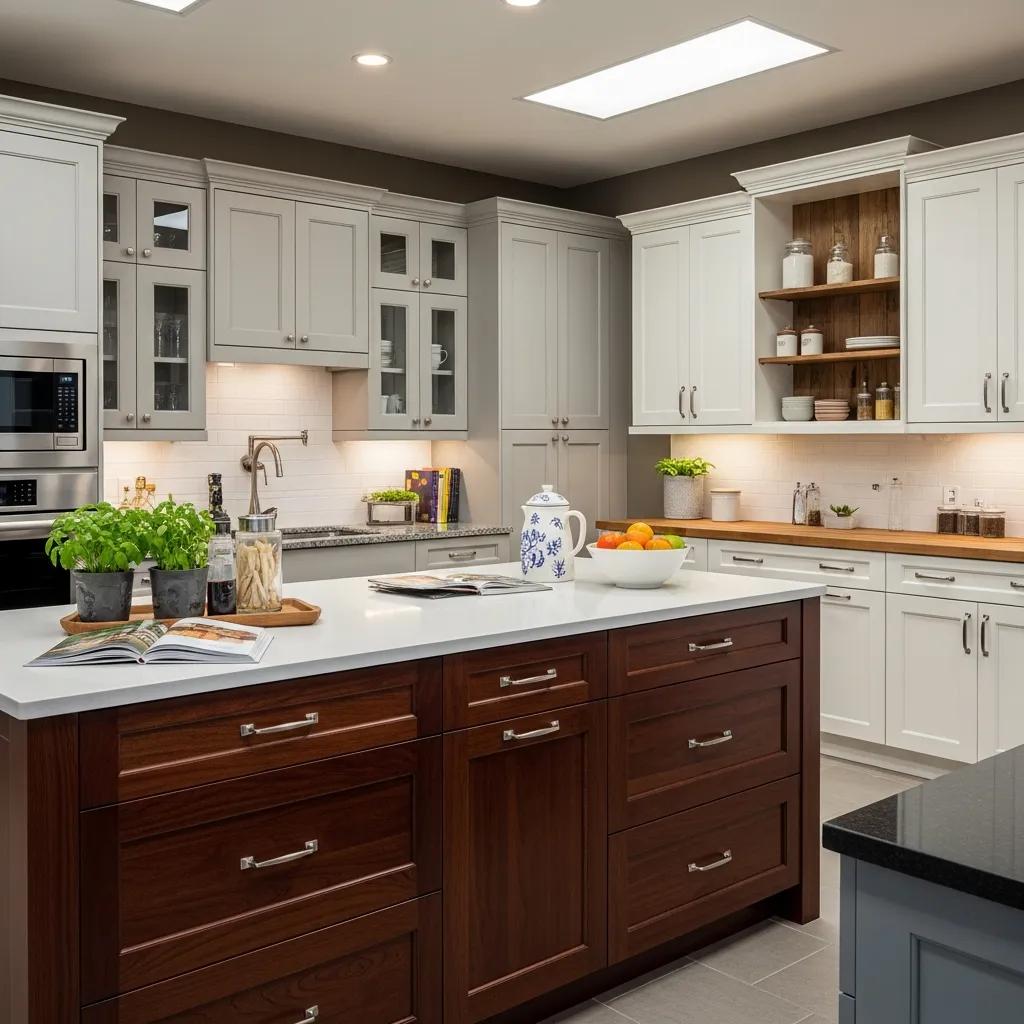
Custom cabinetry options range from stock and semi-custom lines that reduce lead time to fully custom millwork that maximizes fit and design flexibility, and each choice affects durability, cost, and production time. Material options like solid wood and plywood offer longevity and repairability for higher budgets, while MDF and thermofoil provide budget-friendly alternatives that update looks quickly. Functional upgrades such as soft-close hinges, pull-outs, and built-in organizers improve daily usability and often deliver outsized value relative to cost. Considering cabinet type alongside local trends and production timelines helps balance aesthetics with project schedule.
| Cabinet Type | Characteristic | Typical Lead Time |
|---|---|---|
| Stock | Off-the-shelf, lower cost | 1–2 weeks |
| Semi-custom | Modifiable sizes and finishes | 4–8 weeks |
| Custom | Fully tailored to space and design | 8–16+ weeks |
This comparison clarifies trade-offs between speed, customization, and price, helping homeowners select the right approach based on schedule and budget. When lead time is critical, semi-custom or stock options shorten disruption, while custom cabinetry maximizes fit and finishes for long-term value.
Which Kitchen Styles and Materials Are Popular in 2025?
In 2025 Collin County homeowners favor transitional and modern-traditional blends that pair clean lines with warm materials, with engineered quartz, matte finishes, and sustainably sourced woods gaining traction. Popular palettes feature muted tones and mixed materials such as painted base cabinets with natural wood islands, and integrated appliance panels for streamlined looks. Sustainable choices—low-VOC finishes and responsibly sourced plywood—are increasingly sought to balance style with environmental considerations. Style choice influences budget and lead times since specialty finishes and rare woods typically require longer procurement and fabrication windows.
Trending style highlights:
- Transitional layouts that combine modern function with traditional warmth.
- Engineered quartz and matte surface finishes for durability and low maintenance.
- Sustainable materials and finishes that reduce environmental impact.
These trends shape decisions from cabinet construction to countertop selection and often guide resale-minded investments. Style choice should therefore align with both daily use priorities and long-term market expectations.
How Do Custom Cabinets Improve Kitchen Functionality and Design?
Custom cabinets increase functionality by enabling tailored storage solutions—corner pull-outs, built-in pantries, appliance garages, and bespoke drawer interiors—that maximize usable space and improve daily workflow. Custom cabinetry allows precise accommodations for plumbing and structural quirks, resulting in neater installations and fewer on-site adjustments. Design benefits include seamless integration of appliances and millwork details that enhance resale appeal and aesthetic cohesion. Long-term durability from quality joinery and materials also means custom cabinets often outlast stock options and preserve value.
Functional upgrades commonly enabled by custom cabinetry:
- Optimized storage like drawer organizers and vertical tray dividers.
- Specialized compartments for appliances and waste sorting systems.
- Integrated lighting and soft-close hardware for enhanced usability.
These examples show how custom cabinetry elevates both form and function, making the kitchen more efficient and visually coherent. When functionality is a high priority, investing in custom solutions can deliver measurable daily benefits.
How Do You Prepare Your Home for a Smooth and Stress-Free Kitchen Renovation?
Preparing your home reduces stress by clearing expectations, creating protected zones, and setting up alternatives for cooking and daily life while work proceeds. Key pre-start tasks include decluttering, securing any necessary permits, confirming the remodel schedule and points of contact, and protecting adjacent rooms with dust barriers. A defined communication cadence—daily or weekly updates—helps homeowners plan around noisy or disruptive phases and keeps small issues from becoming big problems. Planning temporary facilities for meals and appliance access keeps family routines intact and minimizes friction during the project.
What Steps Should Homeowners Take Before Remodeling Begins?
Before work begins, homeowners should complete a pre-start checklist that includes finalizing design selections, confirming the project schedule and milestones with the contractor, removing personal items from work zones, and obtaining written copies of permits and contract terms. Documenting existing conditions with photos prevents disputes about pre-existing damage and clarifies scope by recording what was agreed. Confirm who will be on-site each day and establish a single point of contact for questions to keep communication efficient. These preparations reduce the chance of unexpected delays and ensure the team can start on the agreed date.
Essential pre-start checklist:
- Finalize design and material selections in writing.
- Confirm written schedule and single point of contact.
- Clear countertops and secure valuables from the work area.
- Verify permits and contractor insurance documentation.
Completing these items creates working conditions that let trades focus on execution rather than administrative questions. That readiness lowers stress and improves the likelihood of finishing on schedule.
How Can You Manage Daily Life During the Kitchen Remodel Process?
Managing daily life means creating a temporary kitchen, scheduling high-disruption work at convenient times, and setting realistic expectations for dust and noise control; these tactics maintain household function and reduce frustration. A temporary kitchen might include a microwave, small appliance station, and portable sink setup depending on space, which supports meal prep without relying on neighbors or takeout. Coordinate high-dust activities like demo on weekdays when family members can be elsewhere, and request nightly cleanup to preserve living spaces. Emotional stress can be mitigated by a predictable update schedule and visible progress markers such as photographed milestones.
Temporary kitchen and daily-life tips:
- Designate a small appliance station with microwave and hotplate.
- Schedule demolition and plumbing rough-in when household traffic is lowest.
- Establish a nightly cleanup and dust-control routine with your contractor.
These measures maintain normal routines and allow the household to function while the remodel proceeds. Clear expectations about daily logistics keep tensions low and progress steady.
What Local Permits and Regulations Affect Kitchen Remodels in Collin County?
Permits are required when remodel work involves structural alterations, new electrical or plumbing systems, or changes that affect egress or mechanical systems; cosmetic work like cabinet refacing and paint often does not require permits. Typical permit types include electrical, plumbing, mechanical, and building permits, and timelines for approval vary by municipality within Collin County. Contractors often prepare and submit permit documents as part of their service, but homeowners should confirm who is responsible for fees and scheduling to avoid surprises. Working proactively with HOAs and local authorities reduces the risk of late-stage compliance issues.
When Are Permits Required for Kitchen Renovations?
Permits are typically required when you change or add electrical circuits, move plumbing lines, alter load-bearing walls, or modify HVAC systems, and you usually do not need permits for cosmetic surface updates such as painting or cabinet refacing. Permit processing times vary—expect a few days for minor electrical or plumbing permits and multiple weeks for structural permits—and fees depend on local jurisdictions within Collin County. Always verify with your contractor or local building department before assuming a permit is not needed because misclassification can lead to inspections failing and costly rework. Contractors who manage permitting reduce homeowner administrative burden and help ensure inspections align with project milestones.
Common permit triggers:
- Electrical upgrades or new circuits.
- Plumbing relocations or additions.
- Structural changes to walls or load-bearing elements.
Knowing when permits are required prevents delays and ensures completed work is insurable and code-compliant. A proactive permitting plan keeps the project on track and reduces the chance of halted work.
How Do Homeowners Work with HOAs and Local Authorities?
Working with HOAs and local authorities begins with reviewing HOA covenants and local design standards, preparing a submittal packet with drawings and materials, and submitting for approval before construction starts to avoid fines or mandated rework. Provide clear documentation of proposed changes and any sample materials to the HOA board, and allow sufficient time since HOA processes can add weeks to the timeline. Keep records of approvals and conditions attached to approvals to ensure the construction team follows required design constraints. Good communication with authorities and transparent documentation reduces friction and speeds approvals when questions arise.
HOA coordination steps:
- Review covenants and neighborhood design guidelines early.
- Prepare a clear submittal packet with images and material samples.
- Track approvals and conditions and share them with your contractor.
These actions streamline the approval process and prevent last-minute corrections that delay project completion. Contractors experienced in Collin County frequently assist with HOA submissions to smooth this step for homeowners.
Provide useful information about their remodeling and cabinetry services, showcase expertise and projects, and lead potential clients to contact them for consultations and estimates. The Perfect Cabinet also offers free onsite consultations and estimates and provides exclusive discounts for military members, first responders, and senior citizens to support community homeowners.
- Free onsite consultation: A technician visits to assess scope and provide a written estimate.
- Transparent estimates: Itemized proposals that align materials, labor, and schedule.
- Community discounts: Special pricing for military, first responders, and senior citizens.
These practical offerings reduce uncertainty in cost and timeline and provide clearer next steps for homeowners ready to plan.
Provide useful information about their remodeling and cabinetry services, showcase expertise and projects, and lead potential clients to contact them for consultations and estimates.